
Focal Priority
Definition
Focal Priority is the degree to which one element clearly dominates attention over all others within a space.
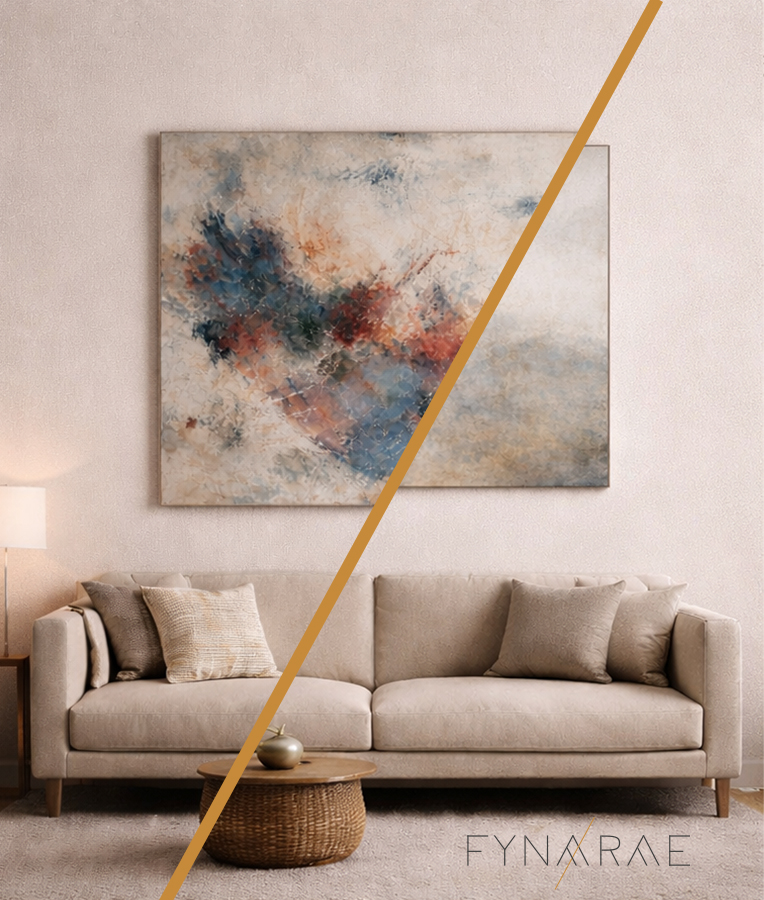
What creates it
- Contrast (light vs dark, simple vs complex)
- Scale (relative size compared to surrounding elements)
- Isolation (space around an element increases its dominance)
- Positioning (central or eye-level placement)
- Light (areas of emphasis or illumination)
How it behaves
- The eye seeks a dominant point first
- Clear priority → immediate orientation
- Competing elements → tension
- No dominant element → drift and disengagement
Why it matters
A space without a clear focal priority feels unresolved.
Even when all elements are correct, nothing leads.
This concept explains why:
- Art feels lost on a wall
- Multiple pieces compete instead of working together
- A room lacks impact despite strong individual elements
This is not:
Visual Weight → which determines how strongly elements pull attention
Spatial Hierarchy → which determines the order in which elements are seen
Cohesion → which determines whether elements feel unified
Focal Priority does not describe how attention moves or how strong elements are—
it defines which element ultimately wins attention.
Related concepts:
Spatial Hierarchy
Visual Weight
Visual Noise
Articles that apply this concept:
Why a Beautiful Room Still Feels Off
Why Your Room Feels Off (Even When It Looks Good)
Why the “Perfect Piece” Still Doesn’t Work
The One Thing Every Space Needs to Feel Complete
How to Create an Emotional Anchor in Any Room
Framework
This concept is part of the Fynarae Framework.