
Definition
Visual Weight is the perceived heaviness of an element that determines how strongly it pulls attention within a space.
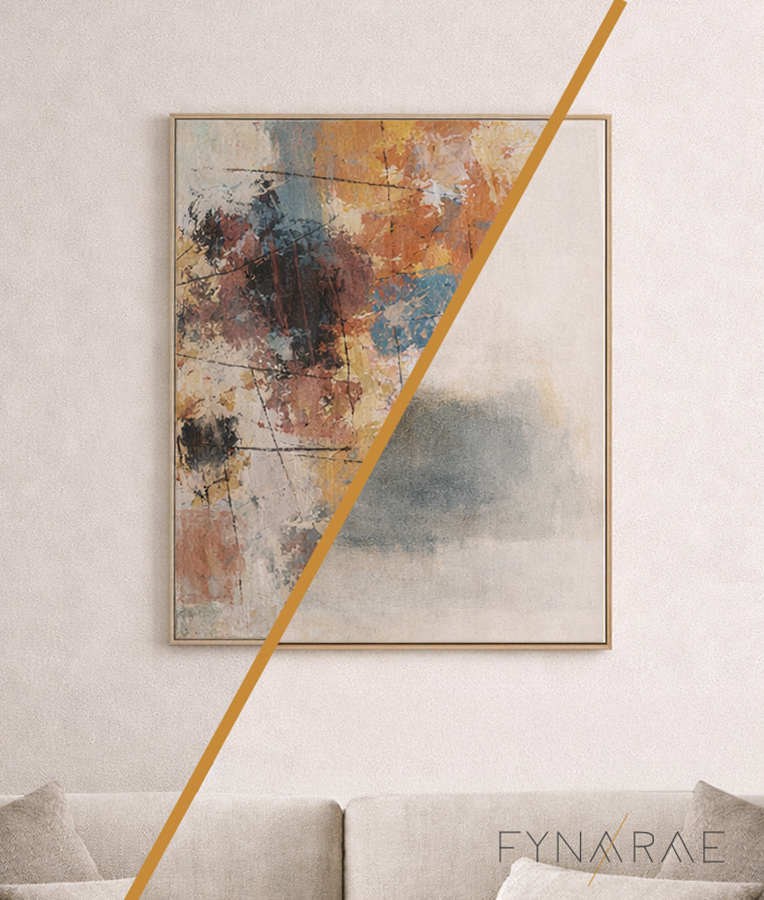
What creates it
- Size (larger elements feel heavier)
- Contrast (higher contrast increases weight)
- Color density (darker or more saturated elements feel heavier)
- Complexity (detailed or textured elements carry more weight)
- Isolation (elements given space feel heavier)
How it behaves
- Heavier elements pull attention more strongly
- Uneven weight creates tension
- Balanced weight creates stability
- Misplaced weight creates discomfort, even when subtle
Why it matters
Most spaces don’t fail because of what is present.
They fail because visual weight is distributed poorly.
This concept explains why:
- A room feels “off” even when everything looks correct
- One side of a space feels heavier than the other
- Moving a single piece can resolve the entire room
This is not:
Spatial Hierarchy → which determines the order in which elements are seen
Focal Priority → which determines what holds the most attention
Cohesion → which determines whether elements feel unified
Visual Weight does not determine sequence or importance—
it determines how strongly each element pulls on attention.
Related concepts:
Spatial Hierarchy
Focal Priority
Visual Noise
Articles that apply this concept:
Why Some Spaces Feel Heavier Than They Should
What Atmospheric Friction Looks Like (and How to Fix It)
Why a Beautiful Room Still Feels Off
Why Your Room Feels Off (Even When It Looks Good)
Framework
This concept is part of the Fynarae Framework.